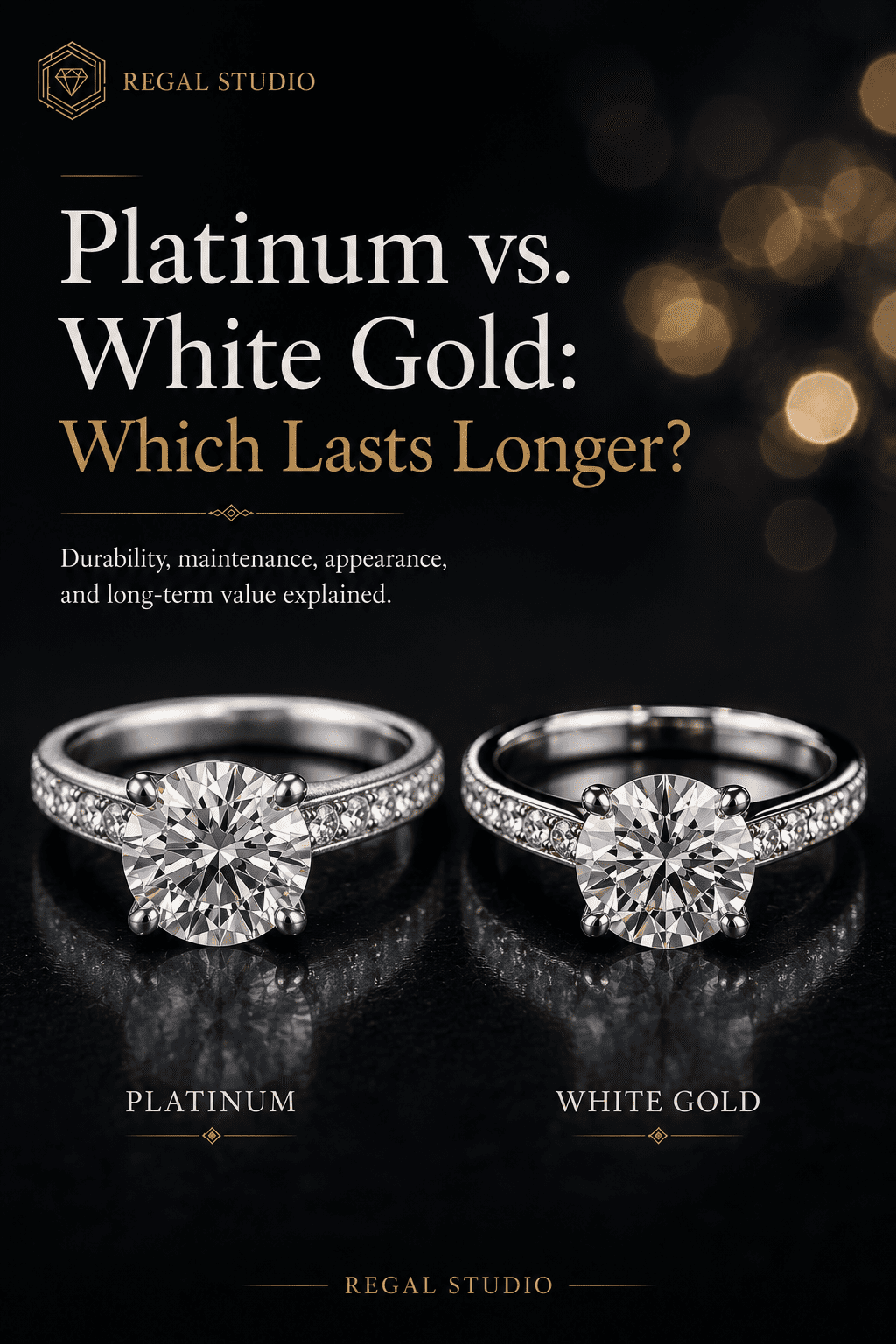
Platinum vs. White Gold: Which Lasts Longer?
Platinum lasts longer than white gold and requires less upkeep. Platinum is naturally white and denser, so it holds stones securely for decades and never needs re-plating. White gold looks nearly identical but is coated in rhodium that wears off over time, requiring re-plating roughly every one to two years to stay bright white. Platinum costs more upfront; white gold is more affordable but carries ongoing maintenance.
Both are excellent choices — here’s how to decide which fits you.
Platinum vs. white gold at a glance
Platinum | White Gold | |
|---|---|---|
Color | Naturally white | White via rhodium plating |
Upkeep | Occasional polish; no re-plating | Re-plate every ~1–2 years |
Durability | Very durable; develops a patina | Durable; coating wears |
Weight | Heavier, denser | Lighter |
Cost | Higher | More affordable |
Sensitive skin | Hypoallergenic (very pure) | May contain nickel; can irritate |
Why does white gold need re-plating?
White gold is yellow gold mixed with white metals, then coated in rhodium to give it that bright, mirror-white finish. With daily wear, that thin rhodium layer gradually wears away, and the ring can take on a faint warm or grayish tone underneath. Re-plating restores the white finish — a routine, inexpensive service, but one you’ll repeat over the years. Platinum needs none of this because it’s white all the way through.
Does platinum really last longer?
In an important sense, yes. Platinum is denser and, when scratched, the metal is displaced rather than lost — over time it develops a soft satin “patina” many people love (and which can be polished back to high shine anytime). That density also means platinum prongs tend to hold a center stone securely for a very long time, which is why it’s a classic choice for heirloom-quality engagement rings.
Is platinum worth the extra cost?
It depends on your priorities. Platinum costs more upfront because it’s used in a purer, denser form and is rarer to work with. But you save on re-plating and gain a metal that ages gracefully. White gold gets you the same white look for less money today, with modest upkeep down the road. Neither is “better” — it’s a trade between upfront cost and long-term maintenance.
Which should you choose?
- Choose platinum if you want maximum durability, the lowest upkeep, hypoallergenic metal, or an heirloom piece meant to last generations.
- Choose white gold if you want the white-metal look at a lower upfront price and don’t mind occasional re-plating.
- Sensitive skin? Lean platinum, which is hypoallergenic; some white gold alloys contain nickel.
A good designer will let you see and feel both in person — the weight difference alone often makes the decision for people.

Working with Regal Studio
At Regal Studio in Buckhead, master designer Mack helps you choose the right metal for your lifestyle and design — platinum, white gold, yellow gold, or rose — as part of every custom piece. GIA Certified, 45+ years at the bench.
📍 3384 Peachtree Rd NE #120, Atlanta, GA 30326 · 📞 (404) 643-8855
Frequently Asked Questions
Which lasts longer, platinum or white gold?
Platinum. It’s denser, holds stones securely for decades, and never needs re-plating, whereas white gold’s rhodium coating wears and must be refreshed periodically.
Does white gold need maintenance?
Yes — re-plating with rhodium roughly every one to two years keeps it bright white, since the coating wears with daily wear.
Is platinum or white gold better for sensitive skin?
Platinum, because it’s hypoallergenic in its pure form. Some white gold alloys contain nickel, which can irritate sensitive skin.
Do platinum and white gold look the same?
When new, nearly identical. Over time, platinum develops a soft patina while white gold can dull until re-plated.
Read More:
Women’s Custom Engagement Ring Styles in Atlanta: Gold, Lab Diamond, and One-of-a-Kind Designs